A Race Is Also a Thinking Task
RESEARCH EXPLAINED
A Race Is Also a Thinking Task
How the brain helps athletes manage their energy — and why this matters for athletes with intellectual impairments.
IN 30 SECONDS
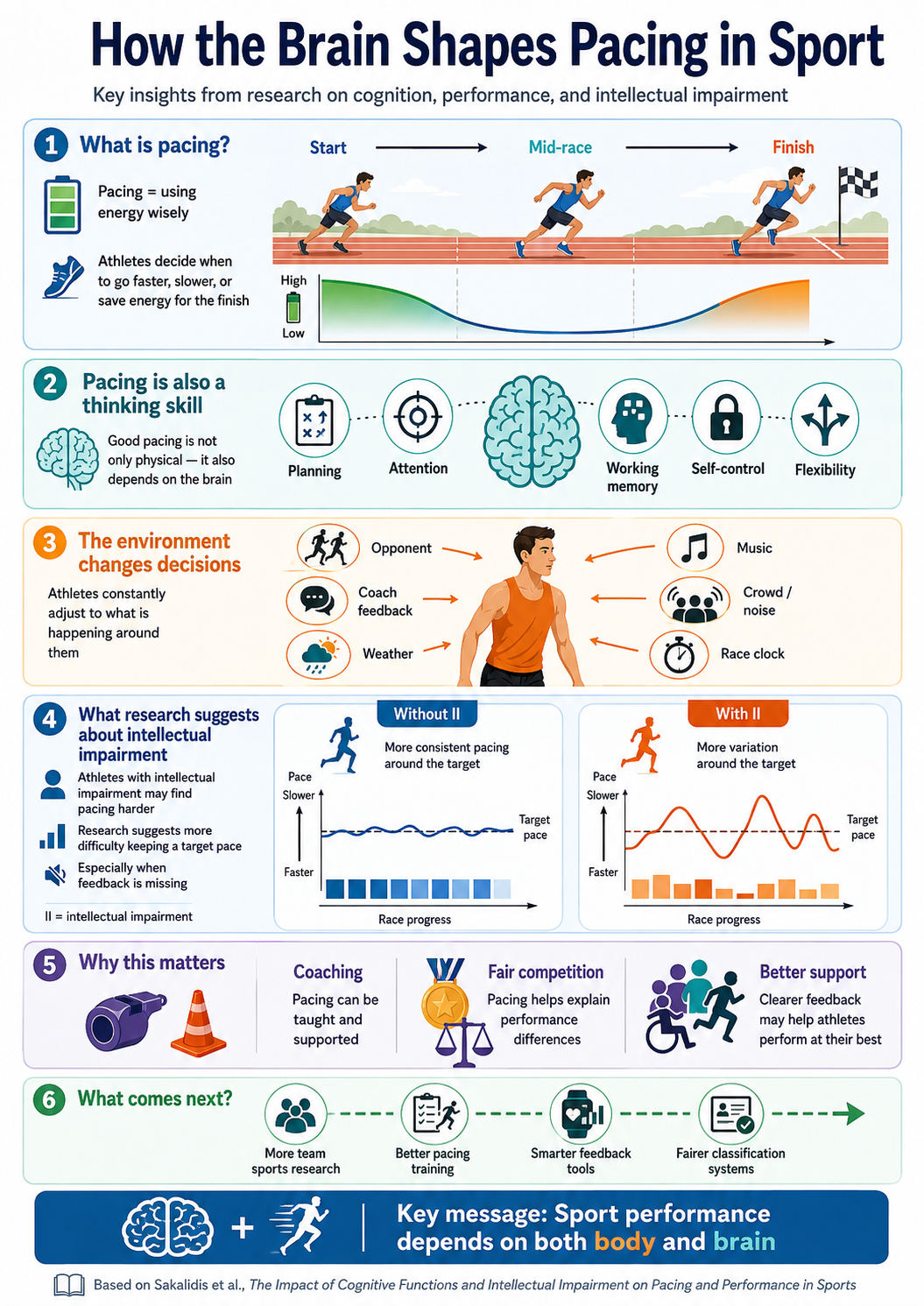
Pacing is the way athletes spread their energy across a race, match or exercise task. It is not only physical: it also depends on planning, attention, working memory, self-control and flexibility. Research suggests that some athletes with intellectual impairments may find pacing more difficult, especially when feedback is limited or when the environment changes quickly. This matters because better coaching, clearer support and fairer competition systems all depend on understanding how the body and the brain work together in sport.
BASED ON
Original academic source
Sakalidis, K. E., Burns, J., Van Biesen, D., Dreegia, W., & Hettinga, F. J. (2021). The Impact of Cognitive Functions and Intellectual Impairment on Pacing and Performance in Sports. Psychology of Sport and Exercise, 52, 101840.